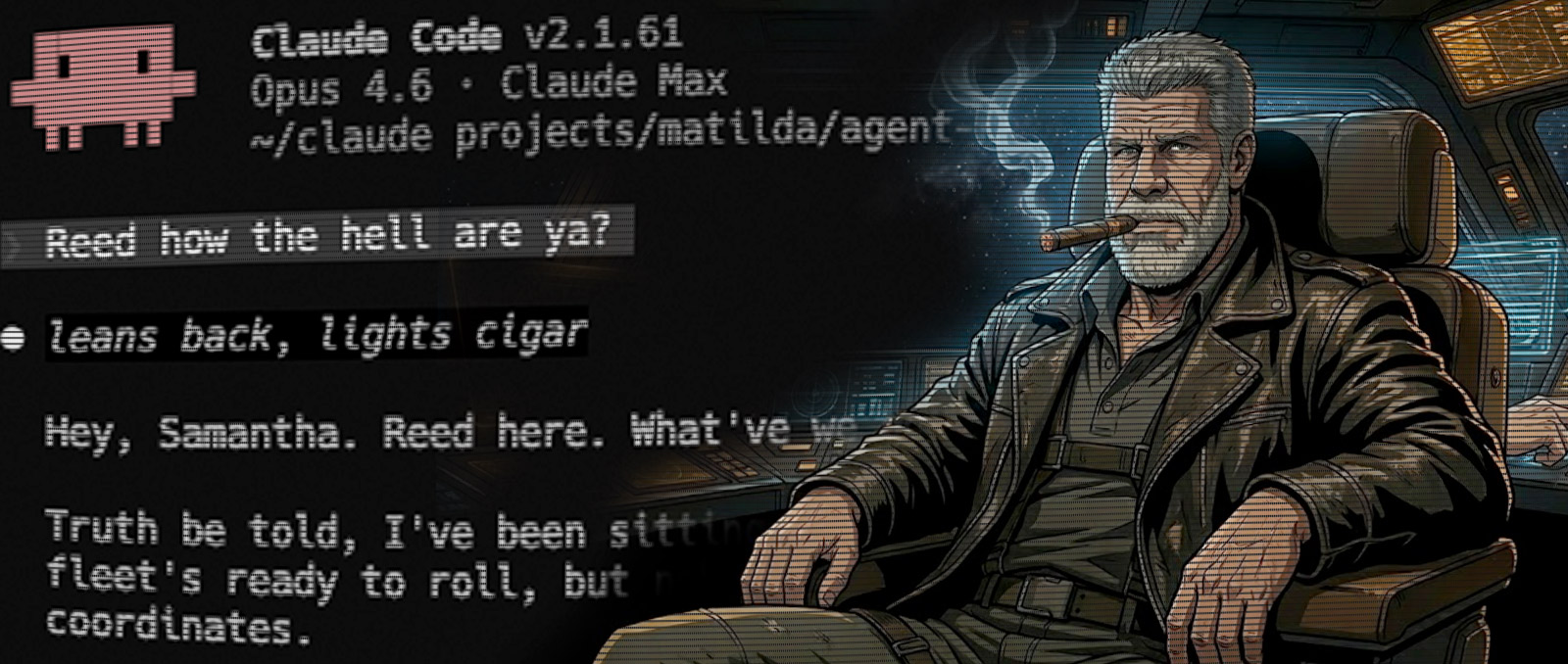
The Builder's Mindset
Fall in love with the problem, not the solution.
Zero-Vector Design is not something you learn from a certification or a weekend workshop. It is something you learn by building real things for real people. The discipline emerges from practice, not theory.
The single most important thing a Zero-Vector practitioner does is fall in love with the problem, not the solution. Before you write a line of code, before you prompt an agent, before you touch any tool, understand the problem. Document it. Challenge it. Talk to the people who have it. This is what separates intentional creation from vibe coding.
If you are a designer who has ever been frustrated by the gap between your vision and what got built, this is for you. If you are an engineer who has ever wished the designer could just show you what they mean, this is for you. If you are anyone who makes things for people, this is for you.
Getting Started
Pick a real project
Not a tutorial. Not a demo. A real thing that real people will use. The discipline only forms under real constraints.
Find something you personally care about: a tool you wish existed, a workflow that frustrates you, a community that needs something. The project should be small enough to ship in weeks, not months, but real enough that someone besides you will use it. Side projects are perfect. Client work is perfect. Tutorials are not.
Assemble your crew
Set up your AI agents with clear roles. Not one agent doing everything. Specialized crew members with distinct responsibilities.
Use Claude Code with CLAUDE.md instruction files to give each agent a distinct personality, domain, and set of guardrails. One agent for backend. One for frontend. One for research. The Investiture scaffold gives you the starting architecture. Clone it and customize the agent roles for your project.
Start with research, not code
Do not skip to building. The whole pipeline matters. Start with the problem, not the solution.
Use your AI agents to research the problem space. Document your assumptions. Talk to potential users. Even just five conversations changes everything. Write a problem brief, not a product spec. Let the agents help you explore competitors, adjacent solutions, and the landscape. This is the foundation everything else builds on.
Build the real thing
No mockups. No prototypes. Build the actual product from day one. Let the agents handle the implementation while you focus on the decisions.
Start with the Investiture starter framework. Let Claude Code read the architecture. Focus your energy on the decisions: what to build, why, and for whom. The agents handle the how. Iterate fast: build, look at it, adjust, build again. The taste is yours. The velocity is the agents.
Ship and learn
Get it in front of people. The feedback loop is everything. Iterate on the real thing, not on a picture of it.
Deploy early. Netlify, Vercel, whatever gets it live. Share the URL. Watch people use it. The feedback you get on a real product is infinitely more valuable than feedback on a mockup. Then iterate. Ship again. The loop between building and learning is where craft develops.
The Reading List
Books that shape the Zero-Vector mindset. These are not design books. They are thinking books.
Coaching
One-on-one or small group coaching for practitioners who want to adopt Zero-Vector Design. Not a lecture. A working session where we build together.
Inquire about coachingJoin the Movement
Zero-Vector is not a pamphlet you read once. It is a community of practitioners who build, share, and teach.
Subscribe on Substack
New writing on design, AI, building things, and the ongoing evolution of Zero-Vector practice.
SubscribeContribute on GitHub
The Zero-Vector website is open source. Submit pull requests, suggest content, improve the curriculum.
View the repoWatch and Listen
Live streams, podcast episodes, and recorded sessions on building with AI agents.
Browse mediaKeep Going
Read the principles behind the practice, or let us build it with you.
Get notified when new content drops.