Zero Vector
No intermediary. No translation layer. No friction. From intent to artifact, directly.
What Is Zero Vector?
Zero Vector Design is a methodology, an open-source ecosystem, and a growing movement redefining how products get built in the age of AI.
The core principle: the distance between human intent and working product should be zero. No handoff. No translation layer. No research that dies in a slide deck. No design that gets lost between Figma and code. The people who understand the customer should be able to build the product, and the tools, frameworks, and doctrine to make that real should be free and open to everyone.
Zero Vector is not just a philosophy. It is an active frontier.
Part production studio, part invention lab, part thought leadership, Zero Vector builds the tools, frameworks, and proof points that turn the manifesto into practice.
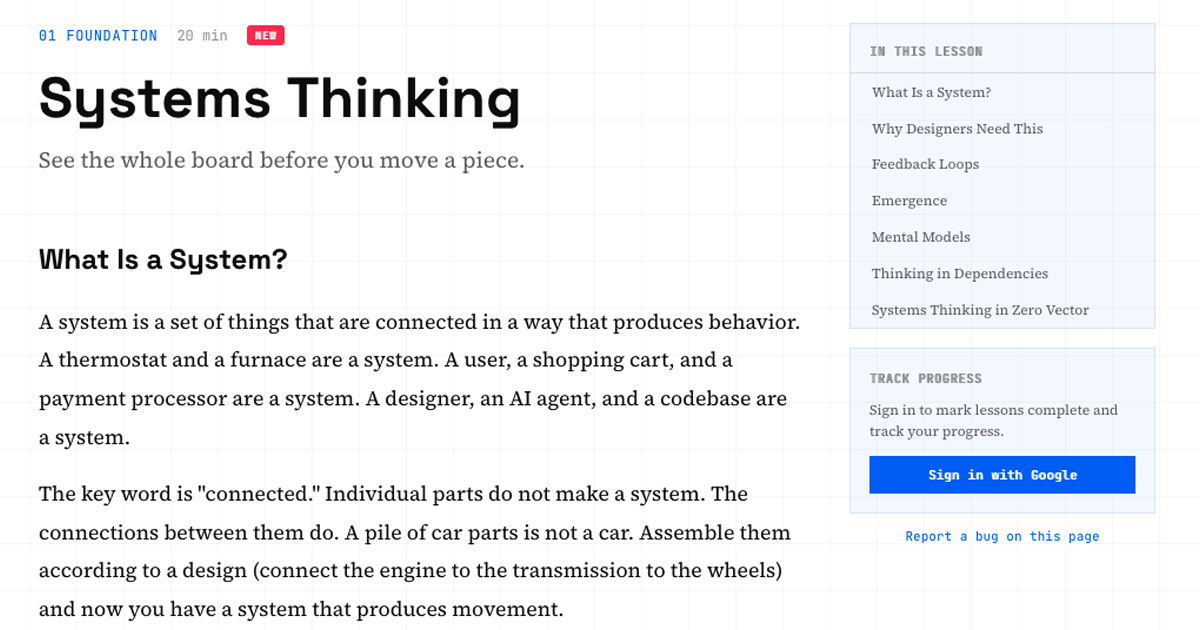
The free learning platform. 60+ lessons teaching design-led engineering from first principles — no prerequisites, no gatekeeping.
The deep framework. A Stormlight Archive-inspired system for understanding design mastery as a progression of invested power.
Open-source persistent memory and knowledge retrieval for any LLM. The infrastructure layer that makes AI agents actually remember.
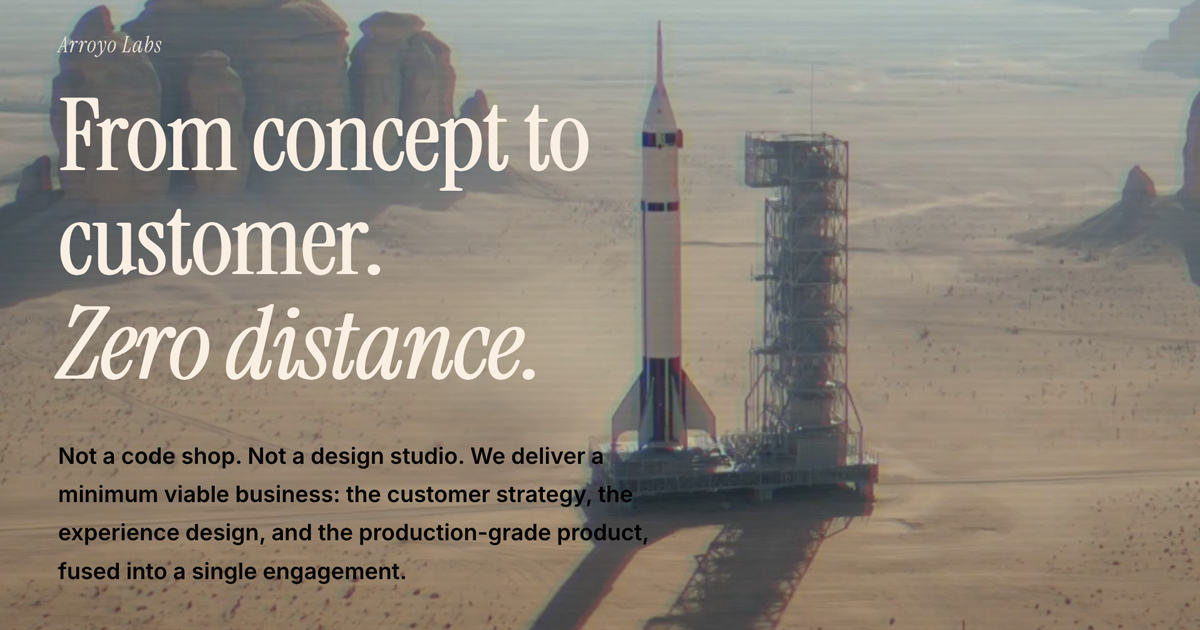
The production arm. One designer, an AI crew, and the full pipeline — from discovery to shipped product in weeks, not quarters.
The Pipeline, Reimagined
Every phase from concept to customer. Transformed.
Zero-Vector applies that thinking across every phase of the pipeline. Not just the build. The research. The synthesis. The validation. The shipping. Every handoff is a place where intent degrades. We eliminate the handoffs.
The Seven Principles
These principles are intentionally opinionated. They exist to help you make decisions in times of indecision or crisis, not to be generic or all-purpose. Opinionated on approach, agnostic on tool.
Work in the Medium.
Build in the real material, not a representation of it. Hands on the rock. No gloves.
Boundaryless by Nature.
No lanes. No disciplines. No artificial walls between thinking and making.
The Medium is the Message.
The tool shapes the thinking. Change the medium, change the mind.
The Purpose of a System is What It Does.
Do not look at what a process claims to produce. Look at what it actually produces.
Design and Build are the Same Act.
The design is the build. The build is the design. There is no handoff because there is no separation.
Dissolve the Hyperspecialization.
Specialization is for insects. Your role is not designer or developer. Your role is auteur.
Venture Past the Possible.
The only way to discover the limits of the possible is to venture past them into the impossible.
What This Is Not. What This Is.
Vibe coding.
Pointing an AI at a screenshot and saying 'make this.' No architecture. No systems thinking. No intention beyond 'it looks right.' Vibe coding produces trinkets. Pretty, fragile, disposable things that break the moment you need them to scale, adapt, or survive contact with real users.
Intentional creation at full velocity.
You bring the systems thinking, the architecture, the years of knowing what good looks like. The AI extends your reach, not your judgment. Speed without intention is just faster failure. Speed with intention is leverage.
AI replaces designers.
That narrative serves two groups: executives who want to cut headcount, and pundits who want engagement. Neither of them are building anything. The replacement framing assumes designers were only valuable for pixel output. If that is all you did, then yes, you have a problem. But that was never the job.
The designer embedded deeper than ever.
The person with the vision ships the vision. No translation. No telephone game. No 'that is not what I meant' in sprint review. You are not removed from the process. You are finally, fully in it. The friction that kept you at arm's length from your own work is gone.
Tool worship.
It is not 'use Claude.' It is not 'learn Cursor.' It is not 'drop Figma.' Tools are vectors, not destinations. The moment you define yourself by a tool, you have built your own cage.
Tool fluency.
Use whatever shortens the distance between intent and artifact. Today that might be Claude Code. Tomorrow it might be something that does not exist yet. The principle survives the tool. If your methodology dies when the tool changes, it was never a methodology. It was a dependency.
Moving fast and breaking things.
That phrase was an excuse to ship garbage and call it iteration. Speed without standards is just chaos with a deployment pipeline.
Moving fast and building things that hold.
Craft and velocity are not opposites. They never were. The old constraint was that quality took time because translation took time. Remove the translation, and quality and speed stop being tradeoffs. You can have both. You should demand both.
The death of craft.
If anything, it is the opposite. When you are no longer spending 80% of your energy on translation and handoff logistics, you can spend that energy on the 1% that actually matters. The details. The moment in the interface that makes someone feel seen.
Craft, finally unshackled.
You spent years developing taste, judgment, and the ability to see what others miss. Those skills were always the point. The tools just kept getting in the way. Now they do not.
Set Coordinates
The tools exist. The agents are ready. The only question is whether you are willing to stop drawing pictures of what you want and start building it.
Get notified when new Zero Vector content drops.